How to Start an SMM Reseller Business | ApiSeller
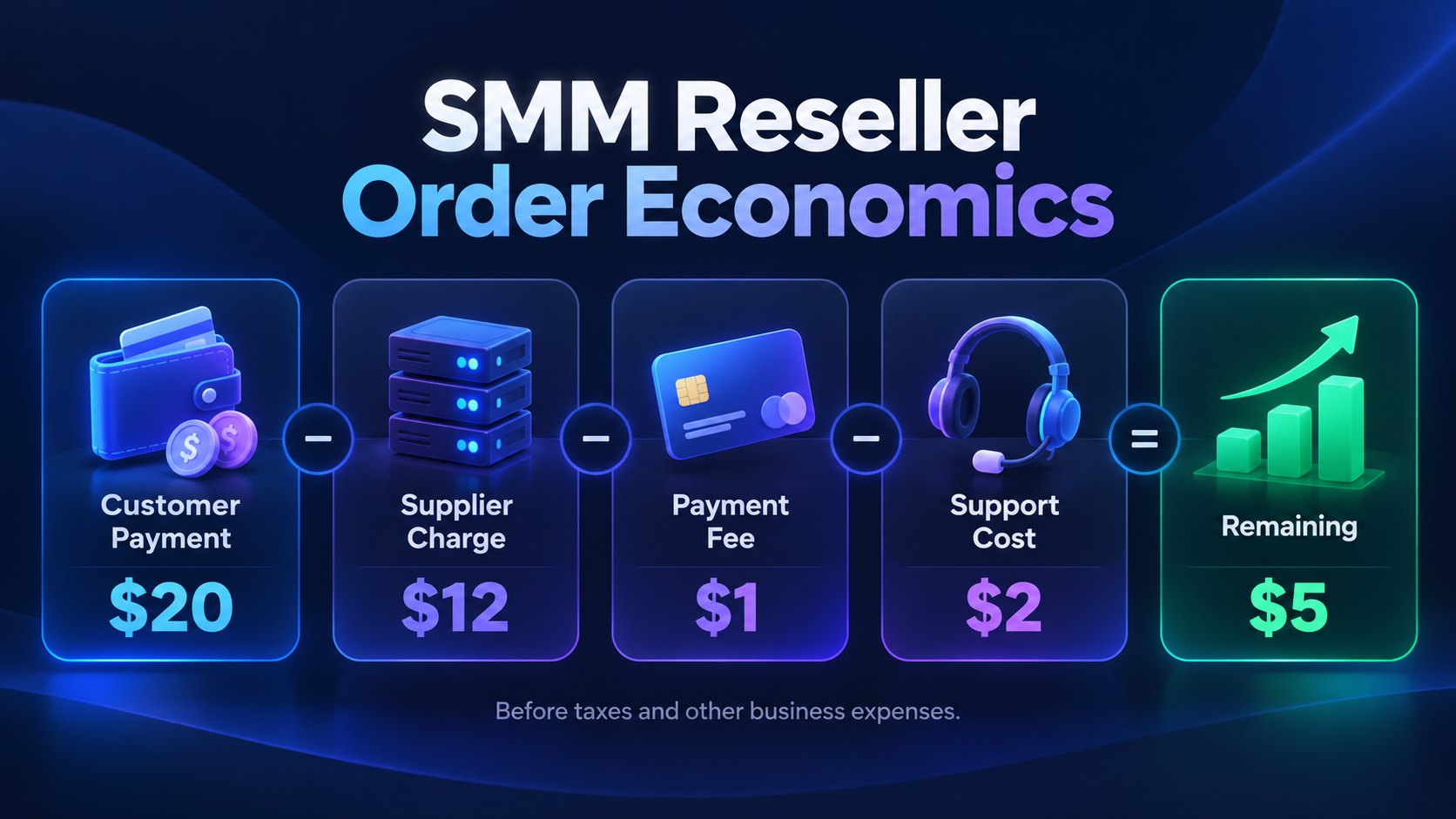
How to Start an SMM Reseller Business and Manage Orders
With an API
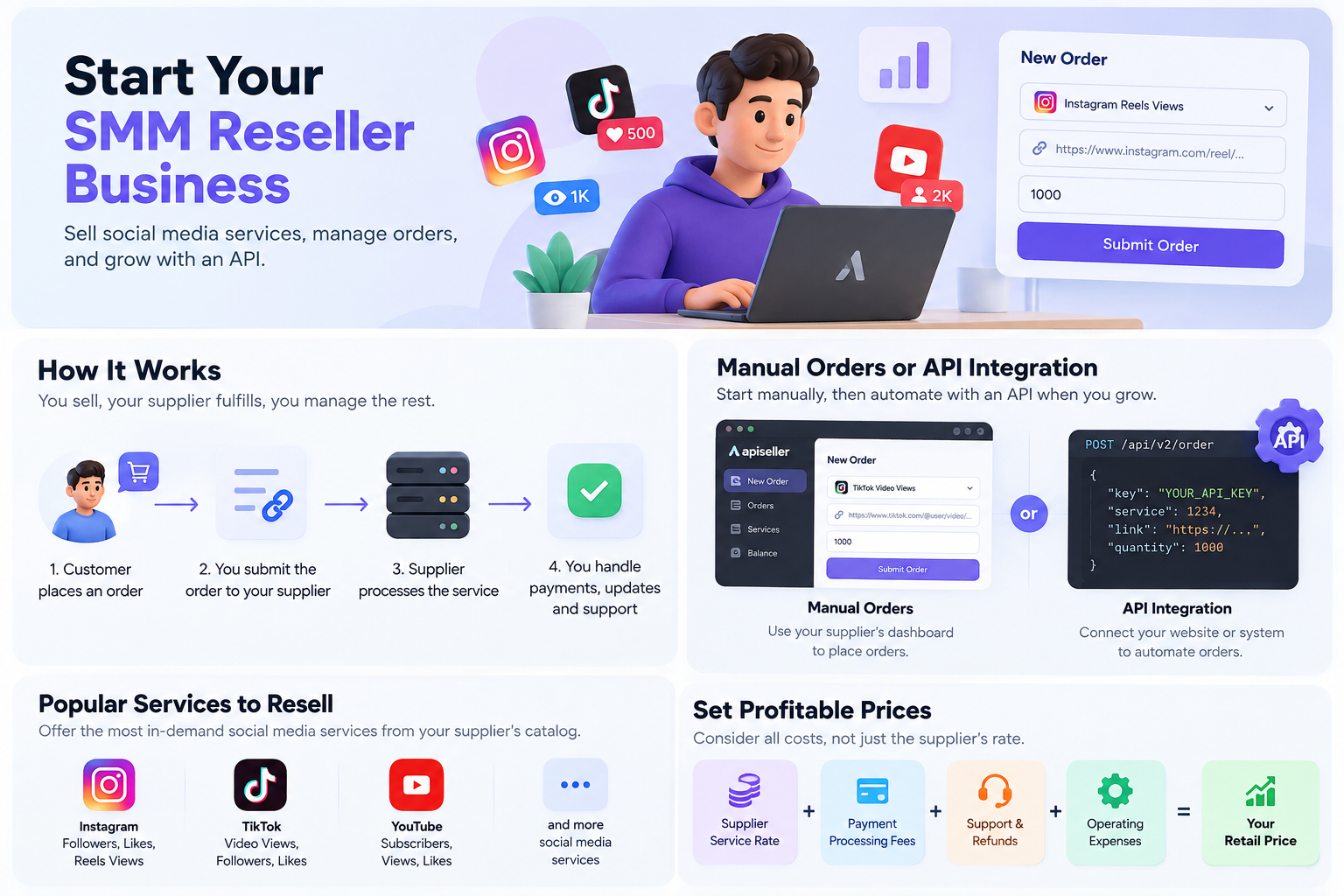
Starting an SMM reseller business involves selling social media services supplied by another company rather than fulfilling every order yourself. When a customer purchases 1,000 Instagram Reels views, for example, you collect the video URL and requested quantity, submit those details to your supplier, and manage the customer's payment and order updates. Your earnings come from the difference between the selling price and the expenses associated with fulfilling the order.
You don't need a dedicated website to begin. Orders can initially be placed through your supplier's dashboard, while an SMM panel API becomes useful when your customer base grows and entering orders manually takes too much time. An API connection allows your own sales system to communicate with the provider, provided the required functions are supported.
What Is an SMM Panel Reseller and How Does It Work?
An SMM panel reseller offers social media services from a supplier's catalog to customers through a separate sales channel. The supplier processes the requested service, while the reseller handles pricing, payment collection, customer communication, and support.
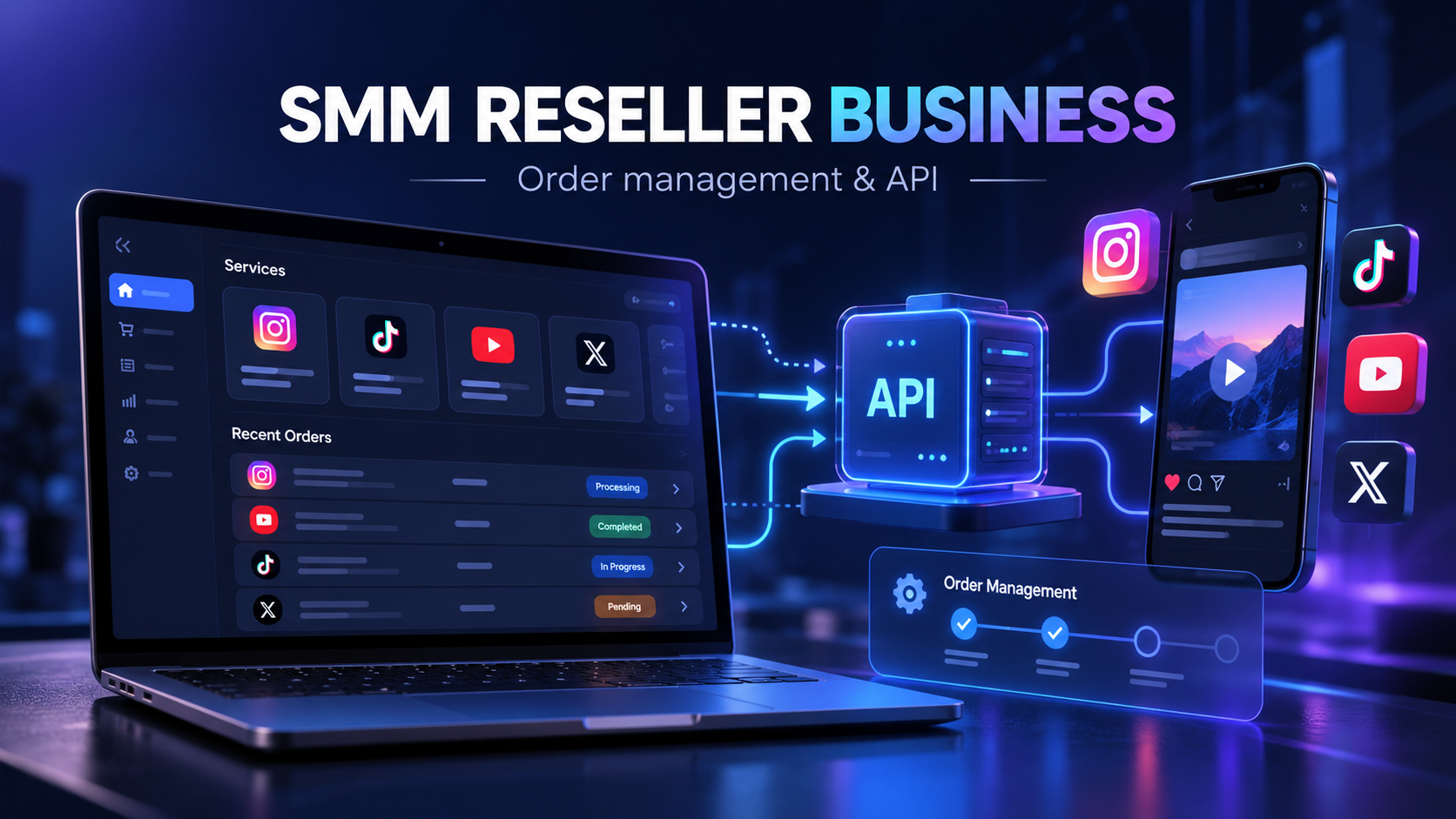
Depending on the supplier, a reseller might offer Instagram
followers, post likes, Reels views, YouTube subscribers, or TikTok video views.
The availability and conditions of individual services depend on the provider's
current catalog.
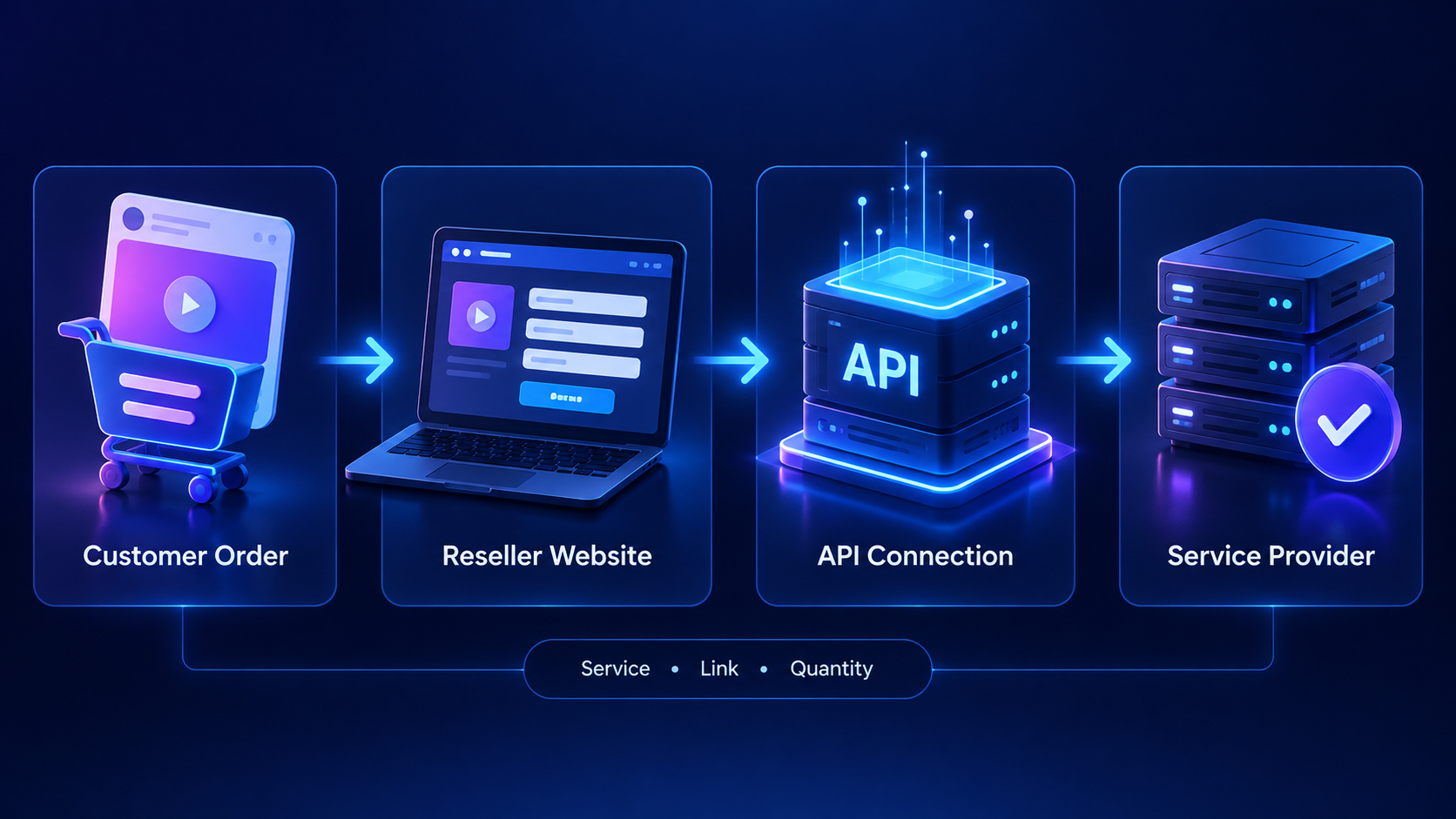
Every order needs the correct service selection, destination
URL, and quantity. An incorrect link could send engagement to the wrong video
or profile, while a quantity outside the supplier's limits may cause the
request to fail. Customers also contact the reseller when questions arise after
purchasing, so responsibility for customer support remains with the business
accepting the order.
How to Start an SMM Reseller Business
The first requirement is finding an SMM service provider
that permits reselling under its account and API terms. After registering,
review the available services and decide how customers will place their orders.
At the beginning, you can receive requests through a sales
channel and submit them manually. Operating your own website becomes more
useful when you want customers to choose packages, make payments, and track
orders through one interface.
Before publishing your offers, examine the supplier's
prices, minimum and maximum quantities, delivery descriptions, and refill
conditions. Services within the same category may have different requirements,
so each package needs an accurate description.
The process can be organized into five steps.
- Create
your supplier account. Register with an SMM panel and review its
account conditions, reseller permissions, and payment requirements before
offering its services to customers.
- Choose
the services you want to sell. Examine the available Instagram,
TikTok, YouTube, and other service categories. Pay attention to order
limits, delivery descriptions, and refill conditions.
- Choose
an ordering method. Start by submitting orders manually through the
provider's dashboard, or connect your existing sales website through an
API if the supplier supports the required integration.
- Calculate
your retail prices. Add payment processing fees and operating expenses
to the supplier's charges before deciding how much customers will pay.
- Track
orders and provide support. Verify the service, destination link, and
quantity for every purchase. Monitor progress through the supplier's panel
and respond to customer inquiries.
Handling the first orders manually also gives you an
opportunity to identify the services customers request most often and the
questions they raise after purchasing. When order volume increases, automation
can reduce the repetitive work of transferring customer requests between two
systems.
How to Choose an SMM Service Provider
A supplier's lowest-priced package may not be suitable for every customer. Services offered for the same social media platform can differ in their delivery descriptions, quantity limits, and refill arrangements.
Suppose two Instagram follower packages appear in the same
category. One includes a stated refill period, while the other is labeled No
Refill. Advertising both packages with an identical refill promise would
misrepresent the supplier's conditions.
Review the description of each service you intend to sell,
including its minimum and maximum order quantities. Delivery estimates should
also be treated according to the conditions published for that individual
service rather than assuming that every package operates at the same speed.
Platform policies deserve consideration as well. YouTube's fake
engagement policy prohibits artificially increasing views, likes,
subscribers, and other engagement metrics. Orders that violate a platform's
rules may result in removed engagement or penalties affecting the customer's
channel.
How Should SMM Resellers Set Their Prices?
The supplier's service rate is only one part of the cost of
an order. Payment processing fees, customer support, refunds, and other
operating expenses affect how much revenue remains after fulfillment.
Some SMM services are priced per 1,000 units, while the
minimum quantity and permitted order sizes vary between packages. Check how the
supplier calculates charges before creating your own pricing structure.
A retail price should account for the actual supplier charge
and the costs associated with processing the customer's purchase. If you sell
different quantities of the same service, calculate the amount payable for each
option using the supplier's pricing method.
Supplier rates can also change. Without automatic price
synchronization, a reseller may continue accepting orders at outdated prices,
reducing the margin or even selling a service for less than its current
fulfillment cost.
How Does an SMM Panel API Integration Work?
An SMM panel API integration allows a reseller's website or application to exchange information with the service provider. Instead of copying the customer's order into the supplier's dashboard, software sends the information through an authenticated connection.
ApiSeller advertises an
advanced API for offering its services to customers through automated order
management. Its terms explain that API access is subject to the platform's
documentation, authentication requirements, and request limits.
The supported commands and connection details must be
checked in the documentation available for your account. Features commonly
found in other SMM panel APIs should not be assumed to work identically with
every provider.
How Are Services and Order Details Transferred?
Many SMM panel APIs provide a method for retrieving service
identifiers and pricing information. A reseller can use this information to
organize the services displayed in their own sales system.
When a customer selects a package, the software can prepare
an order containing the selected service identifier, the appropriate profile or
video URL, and the requested quantity. The provider then processes the request
according to its supported API operations.
Service identifiers need to remain consistent with the
supplier's current catalog. If a service is removed or its identifier changes,
an outdated mapping in the reseller's system could cause an order to fail or
reference an unintended package.
A custom integration should therefore include a way to
maintain accurate service information and handle unsuccessful requests without
creating duplicate orders.
How Can Orders Be Tracked Through an API?
Consider a customer purchasing 1,000 video views through
your website. Once the order is submitted successfully, your sales system
should associate the supplier's order identifier with the customer's purchase
record.
Where supported by the provider's API, the application can
request order-status updates and display them in the customer's account. Your
support team can then review the relevant order record when a customer asks
whether a request is pending, processing, or completed.
The exact status values, response fields, and permitted
request frequency depend on the supplier. ApiSeller's account documentation
should be checked before implementing these operations.
SMM Panel API vs. Ready-Made Reseller Panel
Connecting a supplier's API to your own website and purchasing ready-made reseller panel software are two different approaches to building a sales system.
An API provides a way for applications to communicate, but
it does not automatically create a customer registration system, payment page,
or storefront. These features must be developed or integrated into your
website.
Ready-made reseller panel software may already include those
components, with available features and customization options determined by its
software provider.
|
Comparison |
Custom Website With API |
Ready-Made Reseller Panel |
|
Setup |
Requires software development or integration |
Uses prebuilt software features |
|
Management |
Features can be developed and modified in your own system |
Changes depend on the panel's capabilities |
|
Costs |
Development, hosting, and maintenance expenses |
May involve licensing, subscription, or maintenance fees |
Ready-made panel software is described here as a general
reseller option. This comparison does not mean that ApiSeller sells a complete
ready-made reseller website.
How Much Can You Earn as an SMM Reseller?
The amount retained from each order depends on your selling
price and the expenses required to fulfill it.
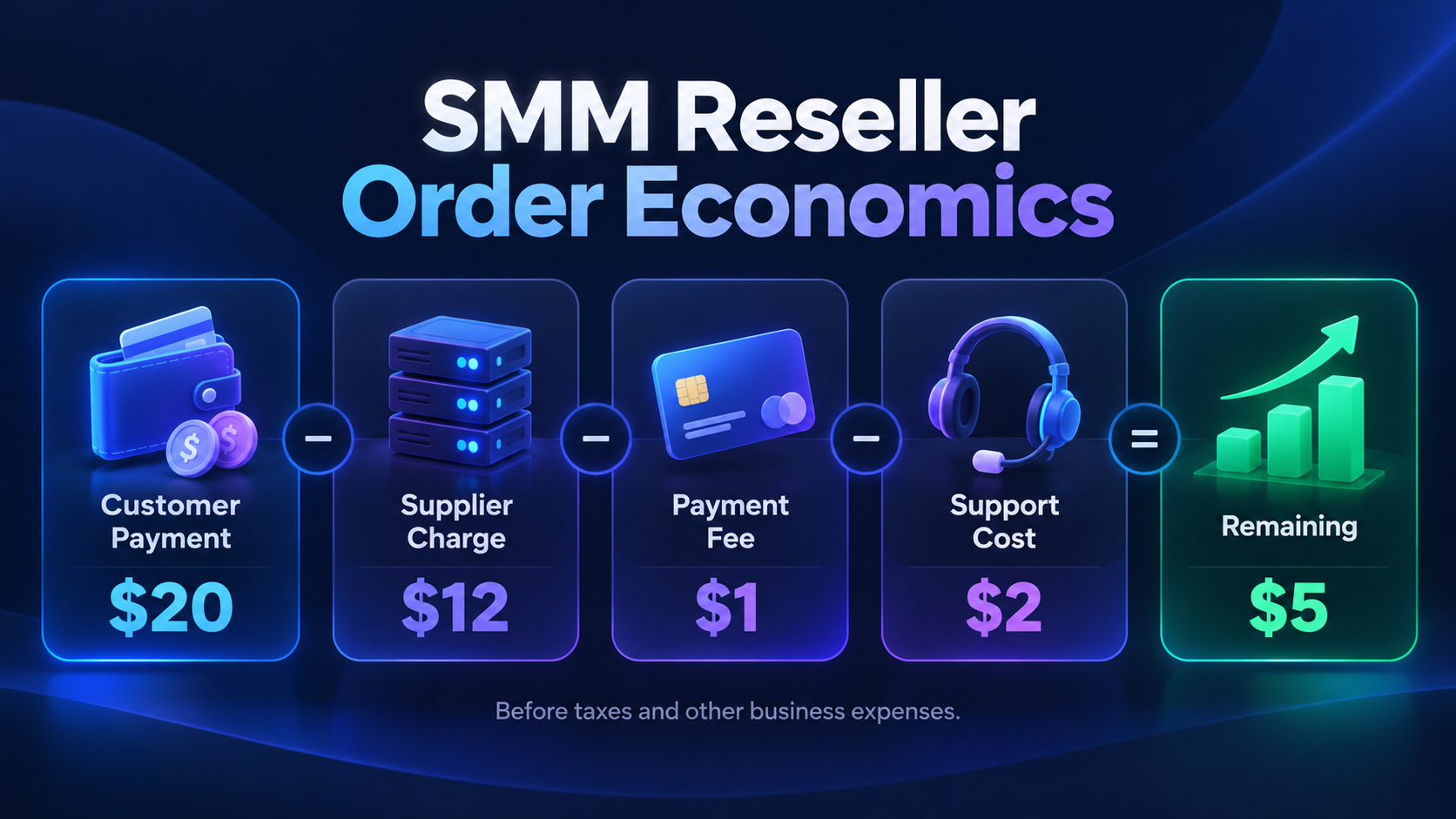
Suppose a customer pays $20 for a service that costs $12
through your supplier. After a $1 payment processing fee and $2 allocated to
customer support, the amount remaining is $5. Taxes and other business expenses
have not yet been deducted.
The same calculation should be applied across your completed
orders rather than assuming that every sale generates the same margin. Refunds,
canceled orders, and support expenses can reduce the money retained from sales.
Maintaining records of both customer payments and supplier
charges also helps when catalog prices change. If the supplier bills in a
different currency from the one your customers use, exchange-rate movements can
affect the amount you ultimately pay for fulfillment.
Which Social Media Services Are Available Through ApiSeller?
The ApiSeller
service catalog includes services for Instagram, YouTube, TikTok, and other
social media platforms.
Instagram categories cover followers, post likes, Reels
views, Story views, and additional engagement services. The catalog also lists
country-targeted Instagram services for customers seeking packages associated
with particular locations.
For YouTube, ApiSeller lists video views and subscriber
packages, while its TikTok categories include followers and video views.
Individual services have their own pricing, order limits, and fulfillment
descriptions.
ApiSeller also promotes a drip-feed feature, which
distributes engagement gradually to give posts a more natural engagement
appearance. The availability and settings of this feature should be checked for
the specific service being ordered.
Because the same category can contain packages with
different refill conditions, customer-facing offers should reflect the exact
service selected. A package described as No Refill should not be
advertised with a refill guarantee simply because another package in the same
category includes one.
How to Get Started With ApiSeller
After registering
with ApiSeller, you can review the available services, examine their
conditions, and use the panel's balance and order management features.
ApiSeller advertises automatic balance loading around the
clock, access to current and previous orders, and customer support through
WhatsApp and its in-panel support system. Its website also describes an
advanced API for customers who want to automate their reseller operations.
Before connecting your own website, check the API
instructions available through your account and confirm that your intended use
complies with ApiSeller's terms. Authentication credentials should be stored
securely on your server and must not be exposed in publicly accessible website
code.
The ApiSeller
Terms and Conditions require users to keep API keys confidential and
prohibit unauthorized sharing or resale of accounts. Reselling services should
be carried out under the permissions and conditions applicable to your account.
Frequently Asked Questions About SMM Reselling
Do You Need Programming Skills to Become an SMM Reseller?
Programming knowledge is not required when customer orders
are submitted manually through a supplier's dashboard. A custom API-connected
website requires software development or assistance from someone who can
implement the integration.
Is It Safe to Share Your SMM Panel API Key With Customers?
No. An API key is a private credential that can authorize
activity through your account. It should remain on your server rather than
being shared with customers or included in publicly accessible JavaScript.
ApiSeller also requires API keys to be kept confidential.
Can You Manage Multiple Social Media Platforms From One Panel?
Yes, if the supplier provides services for the platforms you
want to sell. The same reseller system can organize Instagram, YouTube, TikTok,
and other supported categories. Order forms still need to collect the correct
type of link and quantity for each service.
What Should You Do When Supplier Prices Change?
Check the updated rates and adjust your retail prices if
your system does not synchronize them automatically. Preserve the original
supplier cost for completed orders so that historical earnings remain accurate.
How Do You Know Whether an SMM Service Includes Refills?
Check the individual service description for its refill
period and conditions. Some packages include a stated refill guarantee, while
others offer no refill coverage. If the description is unclear, ask the
supplier's support team before advertising that feature.