What is AI Holobox? How Use to AI Holobox?

At first glance an AI Holobox looks as though it was pulled straight from a futuristic sci-fi universe. Yet, this technology is no longer fiction. The AI Holobox represents a powerful fusion of artificial intelligence and holographic visualization, enabling digital content, virtual assistants, and interactive avatars to appear as three-dimensional holograms right before our eyes. Rather than relying on a conventional flat display, the Holobox brings a dynamic, volumetric presence into physical spaces, transforming how we communicate, learn, and work.
What truly separates the AI Holobox from
traditional hologram systems is its remarkable ability to interact.
Thanks to integrated AI modules—typically advanced language models—the hologram
can understand user commands, answer complex questions, interpret emotion, and
engage in fluid, real-time dialogue. Instead of a static projection users
encounter a responsive and cognitively capable digital companion.
Core Architecture of the AI Holobox
Although it appears magical at first
glance, the AI Holobox is built upon a sophisticated combination of hardware
and software components that work together seamlessly. Achieving an immersive
holographic effect requires high-definition projection systems, precision
sensors, powerful processors, and an intelligent AI engine.
Holographic Projection System
Most consumer and professional Holobox
variants rely on one of two technologies:
● A transparent LCD panel designed for holographic rendering
● High-speed rotating LED fans that create a volumetric display in
mid-air
Both methods are capable of producing
lifelike 3D imagery that appears to float freely within the device's frame.
AI Integration
Artificial intelligence acts as the operational core of the device. Powerful neural networks process voice input, generate natural responses, control lip-sync animations, and coordinate gestures or facial expressions displayed by the hologram. The presence of AI gives depth and personality to the visual avatar, significantly enriching the user experience.

Interaction Sensors
Depending on the model, the Holobox may
include:
● Multi-directional microphones
● High-resolution tracking cameras
● Motion sensors
● Touch-sensitive input areas
These sensors allow the hologram to
perceive its environment, follow user movements, and respond accurately to
verbal or physical prompts.
Connectivity Options
To ensure seamless communication, the
Holobox typically supports Wi-Fi, Bluetooth, and occasionally HDMI or USB-C
ports for external device connections. Cloud access enables AI updates, avatar
enhancements, and remote content management.
In summary, the bold synergy of these components shapes the Holobox features, transforming it into a next-generation communication tool.
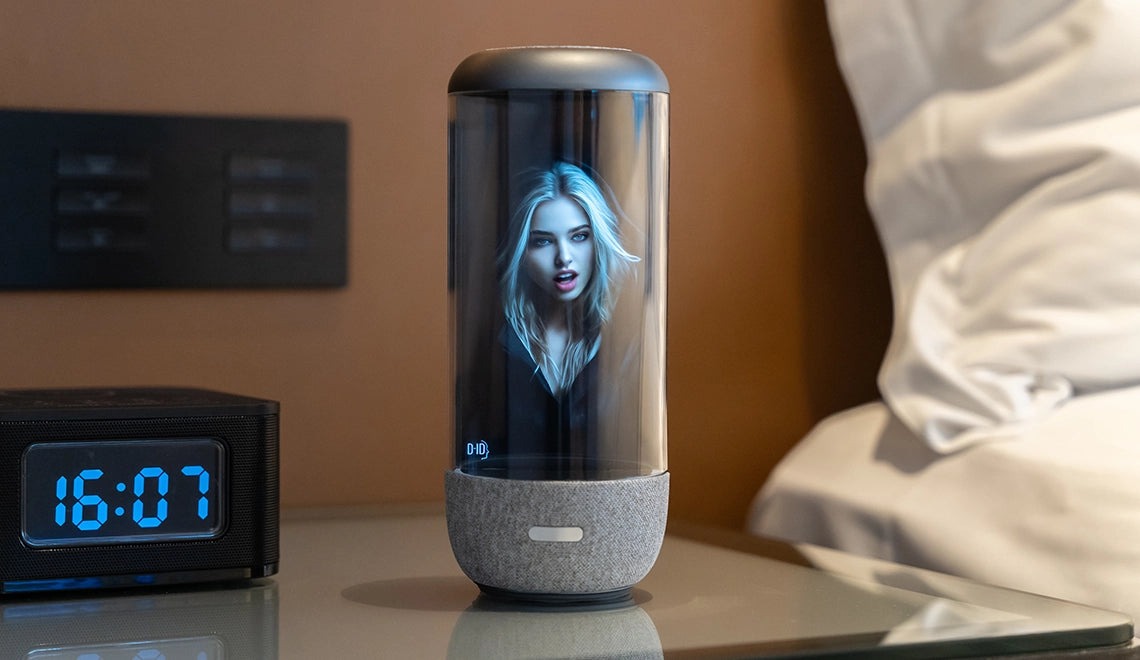
A Deep Look Into Interactive Holographic Intelligence
To understand why the AI Holobox feels so
immersive, we need to explore both its algorithmic intelligence and its visual
engineering. Every element—from the rendering pipeline to the AI-driven
avatar—works toward creating the illusion of a lifelike, present digital being.
Rendering Process
- A projector or internal display generates the base image.
- This image
is reflected onto an angled transparent surface.
- The human eye perceives the reflection as a 3D object suspended in
empty space.
This projection-plus-reflection system is
often a modern adaptation of the historical "Pepper's Ghost"
illusion.
AI-Driven Interaction
When a user says “Hello,” microphones
detect the sound, the AI interprets the speech, formulates a response, and
delivers it through a holographic avatar that visibly speaks the generated
words. Lip movement, gaze direction, and even micro-expressions are
synchronized to enhance realism.
This continuous interaction loop is one
of the most defining Holobox features of modern holographic devices.
Real-World Applications: Beyond Entertainment
While the idea of an AI-driven hologram
may initially sound like a novelty, the technology is rapidly proving its value
across numerous industries. As of 2025, AI Holobox systems are no longer
experimental gadgets—they have become practical, scalable solutions.
Virtual Assistants
Holobox units can act as AI receptionists, store greeters, hotel concierges, or in-home personal assistants. By combining holographic presence with intelligent dialogue engines, businesses can deliver a more humanlike digital interaction.
Remote Collaboration
Imagine attending a meeting where remote
participants appear not as flat video tiles, but as life-sized holograms
standing across the room. Engineering, design, and telemedicine fields benefit
immensely from this improved spatial awareness.
Education and Training
Students can explore molecular
structures, historical figures, or mechanical systems in 3D, with the hologram
guiding them step-by-step. This transforms learning from passive observation
into active engagement.
Retail and Customer Service
Stores already deploy holographic
ambassadors that present product information, answer customer questions, or act
out demonstrations. Their consistent availability reduces operational costs
while enhancing customer experience.
These expanding use cases highlight the
practical power of the Holobox features in modern business environments.
Holobox Models: Personal vs. Professional Systems
Today’s market offers two primary
categories of AI Holobox devices:
1. Compact Desktop Models
Priced around $299, these smaller units
typically range between 6 and 8 inches. They are ideal for personal use—serving
as AI companions, smart photo frames, or miniature customer-service bots. Their
compact size makes them accessible to everyday consumers.
2. Large-Scale Professional Installations
These premium systems, showcased at
events such as CES 2025, can reach 86 inches or more. Their holographic
projections often appear life-sized, making them suitable for corporate
showrooms, educational institutions, and high-end retail spaces. They offer significantly
enhanced Holobox features, such as ultra-realistic avatars, higher
resolution, and advanced interaction sensors.
Market Trends and Future Outlook
As global remote work and digital
communication continue to evolve, holographic systems are becoming increasingly
relevant. Major companies are investing in Holobox-based solutions to make
remote interactions more engaging and realistic. Industry research suggests
that the holographic display market will multiply within the next five years,
driven largely by AI-enhanced hologram demand.
One of the most transformative Holobox features is its ability to learn. Newer models can adapt to user preferences, recognize recurring patterns, and interpret emotional tone. The holograms feel more “alive” as they develop personalized responses and more natural expressions—paving the way for deeply immersive digital companions.

A New Era of Human–AI Interaction
The AI Holobox is redefining how we
visualize information, communicate with technology, and experience virtual
presence. Its blend of holography, AI intelligence, and multisensory
interaction capabilities makes it one of the most compelling innovations of the
decade.
With ongoing advancements and expanding
applications, the future will bring even more sophisticated Holobox features,
enabling AI-powered holograms to become a routine part of daily life—at home,
at work, and everywhere in between.