
Instagram Story views can drop when followers watch your Stories less often, interact with them less, or lose interest in the topics you share. Instagram does not show Stories to every follower in the same order, so changes in viewing habits can also affect where your content appears in the Stories tray. If an account has 10,000 followers but a Story reaches 1,000 people, that does not mean Instagram deliberately hid it from the other 9,000. Not everyone opens the app each day, and even active users do not watch every Story. A single unusually popular Story can also make your next posts look weaker than they really are. To understand a drop, compare the reach and responses of similar Stories rather than treating one high-performing post as the benchmark.
Instagram's explanations of Story ranking describe signals
such as viewing history, interactions, and the relationship between an account
and its followers. If people change how they engage with your account, your
position in their Stories tray may change even when your follower count stays
the same.
When someone regularly opens your Stories and replies to
them, Instagram may predict that they will want to see more of your updates. If
that person stops watching or responding, your future Stories may appear
farther back in their tray. Consider an account that repeatedly posts nearly
identical promotional announcements. Followers who begin skipping those
announcements may be less inclined to open the next one. A decline in views,
then, is not automatically evidence of an account restriction.
Posting several similar photos of the same product can cause
viewers to leave before reaching the later frames. If 700 accounts see the
first Story but only 300 reach the last, look for the point where people begin
dropping off. In September 2025, Instagram said it had fixed a bug that reduced
overall Story reach for some people who posted multiple Stories in one day.
Posting several Stories is not, by itself, a reason to assume Instagram is
penalizing your account. Viewers leaving an overly long sequence is a separate
issue.
If you start publishing when fewer followers are online,
your Stories may receive fewer views during their first hours. A shift in
subject matter can also make existing followers less interested. And if a
special promotion once generated unusually high traffic, using that exceptional
result as the standard for every new Story will distort the comparison. Look at
Stories about similar subjects published at roughly similar times to understand
whether performance has really changed.
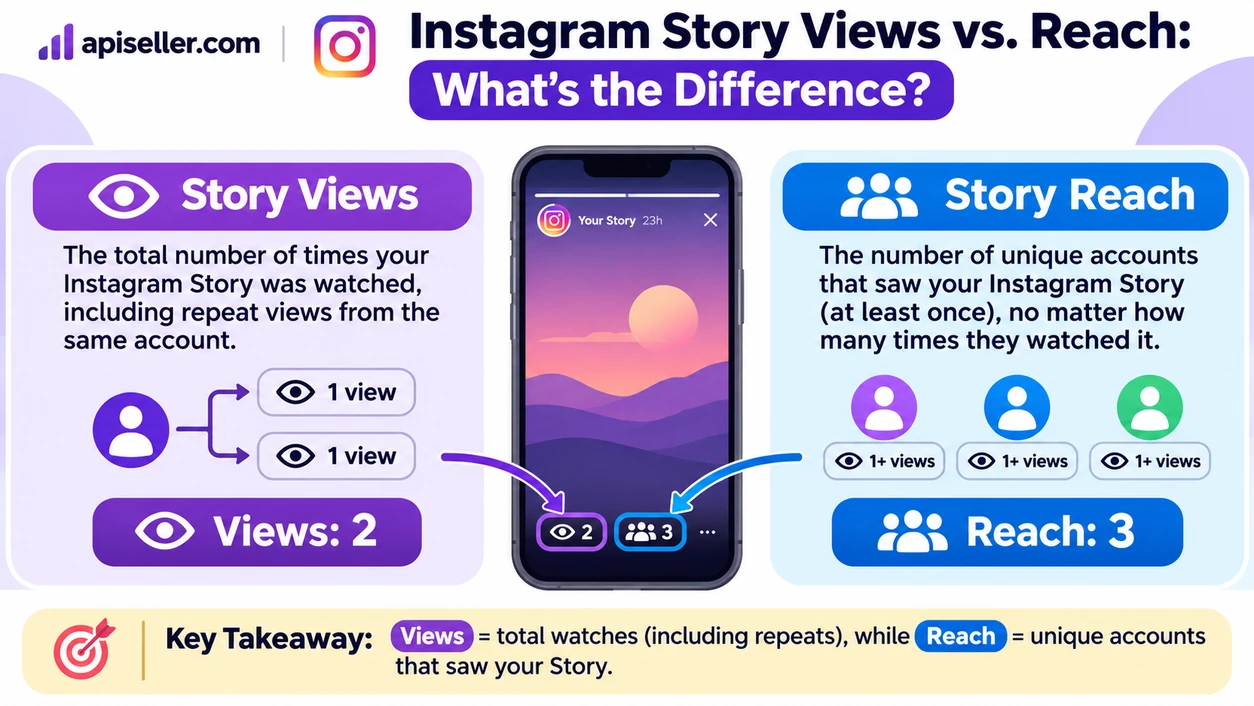
Story views measure how many times a Story was
viewed, while reach refers to the number of unique accounts that saw it.
A Story could reach 500 accounts and record 650 views if some people watched it
more than once. Repeat viewing can increase the view count without adding
another account to your reach total. Confusing those numbers can make an
audience appear to have grown when the extra views actually came from people
who had already seen the content.
Instagram's labels and reporting methods can change over
time. Rather than compare an older impressions figure with a newer reach
figure, follow the same metric over comparable periods. The metrics available
can also vary with account eligibility and the version of the app.
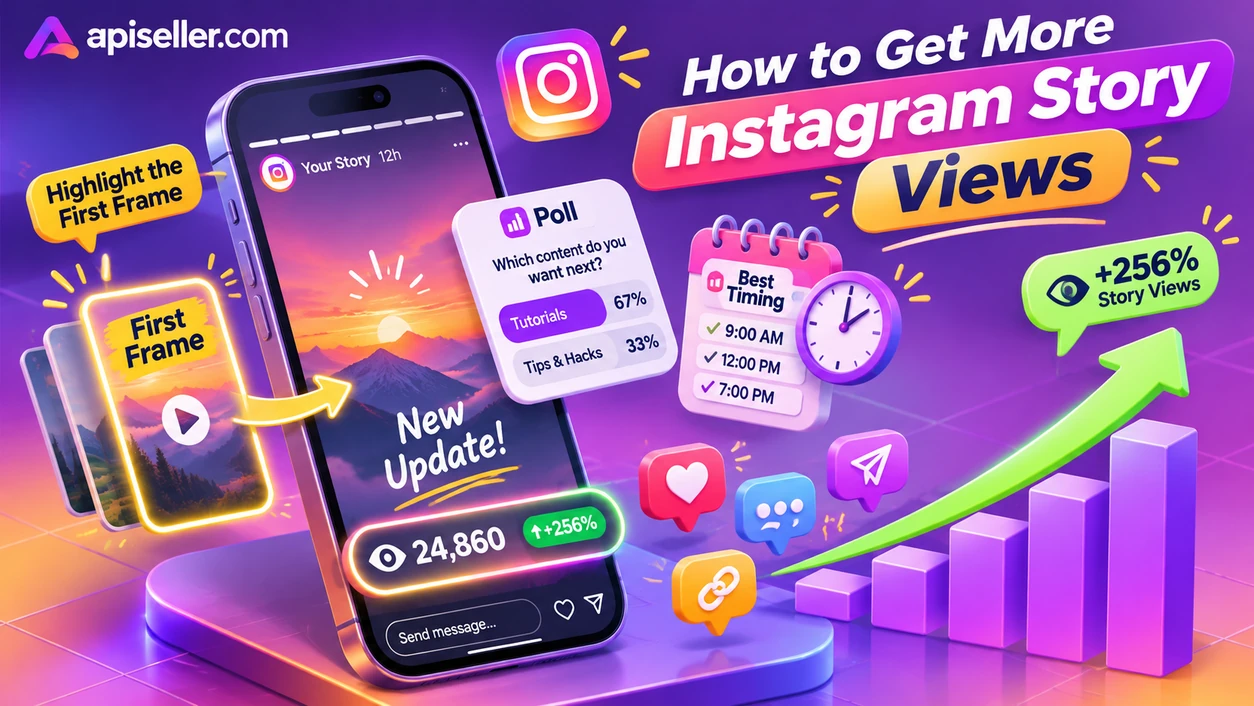
To improve Instagram Story views, start by finding
which Stories followers open and where they stop watching. Use those patterns
to adjust your content instead of increasing your posting volume without a
clear reason.
If you plan to show how a product works, introduce the
product and the feature you will explain in the opening frame. Making viewers
tap through several vague slides before reaching the useful information gives
them more chances to leave. Short, readable on-screen captions can also help
people follow videos with the sound off.
A poll works best when you genuinely want to learn something
about your audience. After comparing two product features, for example, ask
which one followers would like to see explained in more detail and use their
answers in a later Story. Question and link stickers can encourage Story
engagement when they serve a clear purpose, but adding a sticker does not
guarantee more views.
Try turning a 12-frame product presentation into a focused
sequence of three to five Stories. One frame can introduce the product, another
can show it in use, and a later frame can address a common question. Three to
five is a test format, not an official Instagram limit or a universal ideal.
The goal is to remove repetitive frames without cutting information viewers
actually need.
If your professional account provides follower-activity
data, use it to choose a few posting windows to test. Publish comparable types
of content on different days and repeat the test before drawing conclusions. If
followers live in several countries, posting according to only one time zone
may miss a substantial part of your audience.
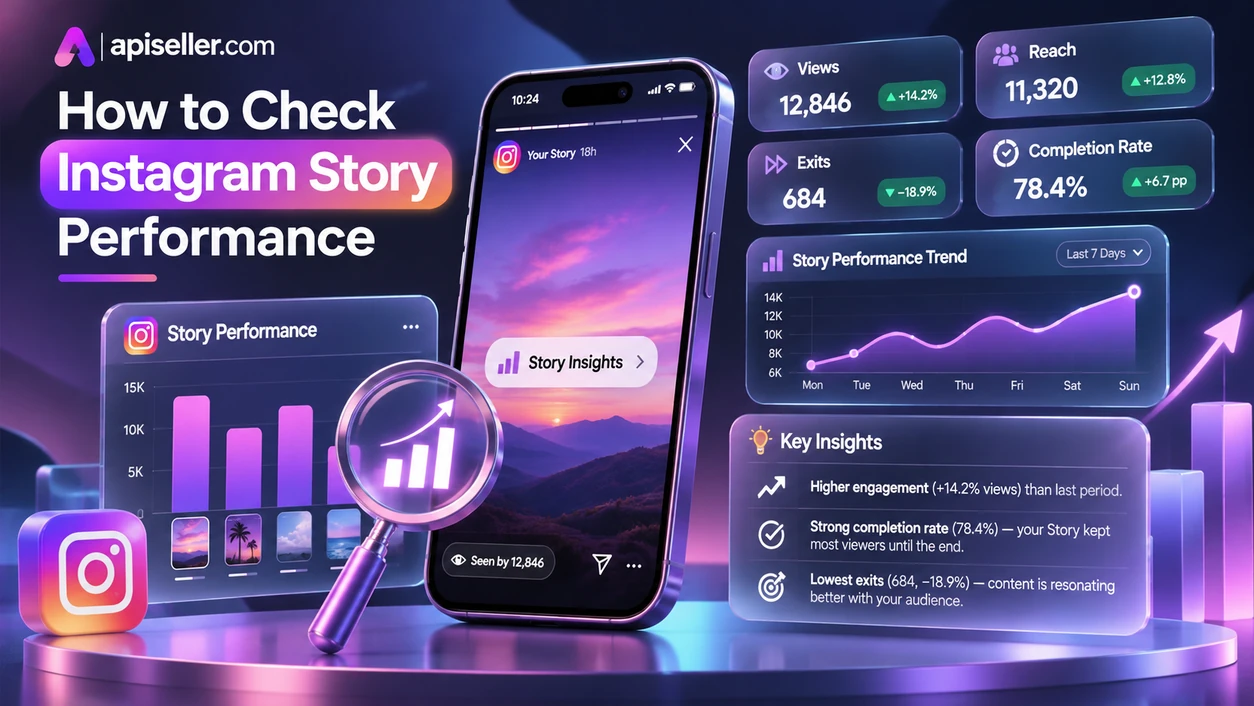
Professional accounts may be able to review Instagram
Story Insights through the app's analytics tools. Compare Stories on
similar topics, posted at similar times, across the last 7–14 days. If fewer
people open the first Story than they did the previous week, investigate
whether interest or viewing habits have changed. If the bigger drop happens
later in a sequence, review its length and the order in which you present
information.
Where available, replies, link clicks, and profile visits
reveal what people do after seeing your content. Give each Story the same
amount of time to accumulate results before comparing them: a Story that has
been live for 24 hours should not be judged against one posted only a few
minutes ago. The exact metrics and menus you see may depend on your account and
Instagram's current reporting features.
ApiSeller lists Instagram Story views among its
Instagram services. Its website also describes a centralized dashboard for
services across multiple social platforms, automated order processing and
tracking, several payment methods, and API access for order management.
ApiSeller advertises free trial credit for new users and bonus credit on
balance top-ups. The quantity limits, expected start times, and any refill
conditions for Story-view packages must be checked in the description of the
individual service.
Ordering views does not tell you how many viewers found a
Story genuinely interesting or whether any sales resulted from it. Artificial
engagement can also carry risks under Instagram's rules. If you are considering
a package, review ApiSeller's service
catalog and terms and
conditions to understand what the selected service includes. Do not treat
purchased views as equivalent to organic reach.
Not every follower opens Instagram every day, and those who
do are not guaranteed to tap your Story. Sharing only with Close Friends or
hiding a Story from selected accounts also reduces who can view it.
First, allow the analytics data to update and check the
Story's audience settings. If the decline continues, compare its reach with
similar Stories published at similar times on earlier days. One poorly
performing Story does not establish that your account has been restricted.
Instagram has not announced a general reach penalty for
posting several Stories in a day, and it said it fixed a related reach bug in
September 2025. Later frames may still receive fewer views because not everyone
who opens the first frame continues to the end.
If your Story reach has declined, compare similar content
over the same time period before changing your posting schedule or format. If
you are also exploring view services, the current ApiSeller service catalog provides
package details and ordering terms. Keeping those purchases separate from your
organic performance analysis will help you understand which changes are
affecting your audience's behavior.