How to improve your Facebook relevance score?
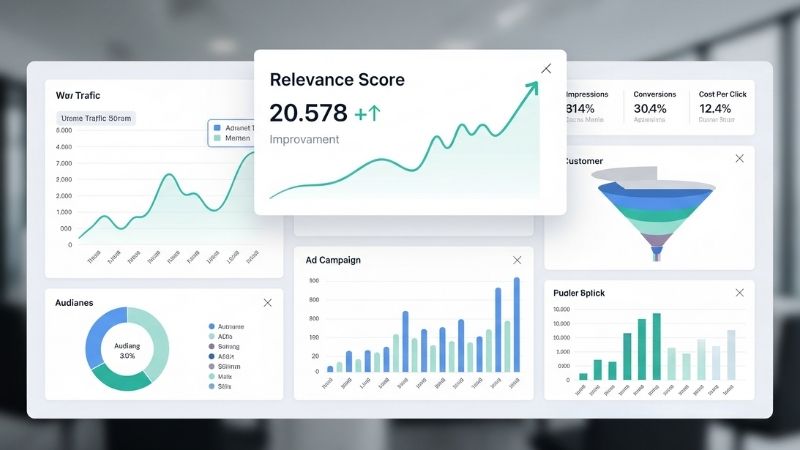
It's that familiar scenario again. You invested money in advertising, thought you'd chosen the best images, written the best copy, but the results? Disappointment. You feel like you're not getting your money's worth. You wonder where the problem lies. The answer to that question is often hidden in Facebook's unpopular but ultimately compulsory metric: Relevance Score. While they've now spruced up their name and renamed it "Ad Relevance Diagnostics," the principle remains the same. This score is a kind of rating Facebook gives you, showing you how happy you made the user. And this rating directly impacts your advertising bill.
So, figuring out how to improve your Facebook relevance score isn't just about learning a fancy marketing term; it's about saving money.
If You Don't Know Who You're Shooting At, You'll Miss

First of all, let's address the targeting issue. Reaching millions of people sounds great, right? But that's complete nonsense. If ninety-nine point nine of those million people aren't interested in you, you've wasted your ad. Targeting broadly is like trying to sell your favorite author's book to a packed stadium. You might get a few interested people, but to the thousands more, you're just noise. Facebook picks up on this instantly. Users hide your ad, say, "I'm not interested," and bam! Your Relevance score starts to drop. So the first rule: Less is more. Find that small, loyal audience who will truly listen to you.
So how do we find that "right" audience? Don't be afraid to use the tools Facebook gives us. But use them wisely. When targeting interest, instead of choosing something general like "shoes," dig deeper, like "men interested in handmade leather boots who have shopped online in the last six months." The real kicker is Custom Audiences. Targeting your site visitors, those on your email list, is like asking someone you've had coffee with before, "How are you?" instead of cold calling. You already have a relationship. Things go much more easily. And of course, Lookalikes... Give Facebook a list of your best customers and say, "Find me more of them." It's like cheating, but it's completely legal and incredibly effective.
So, the bottom line is, think of your target audience like a lover. Try to really get to know them. What do they like, what do they hate, where do they hang out online? When you find the answers to these questions, your ads stop being noise and become an anticipated message. That's when your relevance score starts thanking you.
If You Can't Stop That Ad, You're Lost
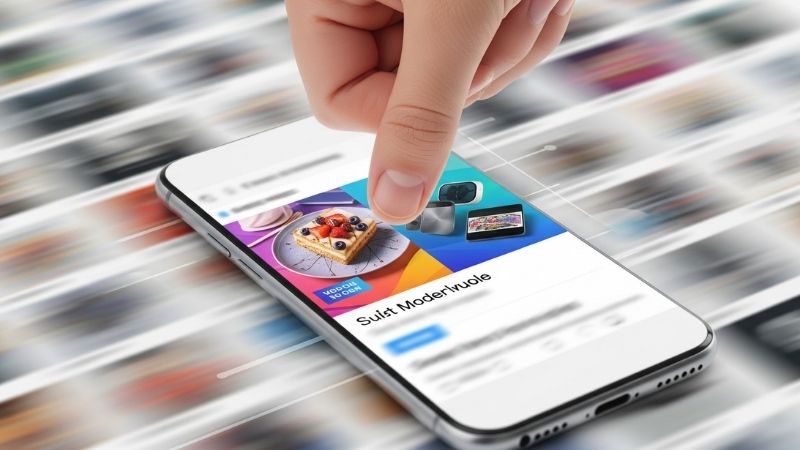
You've found the right audience. Great. Now, what will you do to reach that audience? Remember, your competition isn't just other brands. It's the user's funny cat videos, their best friend's vacation photo, and breaking news. Amidst all these distractions, your ad needs to stop that finger. How? By surprise. With an unexpected visual, honest copy, and sincerity. Everyone is tired of polished, corporate, stock-photography ads. In a recent test for a client, a photo of the office dog playing with a product received three times more engagement than a professional studio shot. Why? Because it was real. People respond to real things.
Think about the ad as a whole. The image, the copy, the headline—they should all tell the same story. And you'll never guess which one works best. You absolutely must test it. Assumptions are the biggest enemy of this business. Make a list of simple tests for yourself, for example:
- Image: A brightly colored graphic or a calm photo of a person?
- Video: A fast-paced video with music or a quiet, captioned narrative?
- Title: A title that directly shouts "Sale!" or asks a question?
- Text: A punchy one-sentence text or a three-paragraph story?
You don't need a big budget to run these tests. You can start small and then funnel money into the winners once you find them. This constant trial and error is the best way to tell Facebook, "Hey, I strive to provide the best experience for my users." The algorithm loves this effort.
A Minefield After the Click

And here we are, where the most common mistake is made. Your ad is great, your targeting is flawless. The user clicked. And... You sent them to a site that loads slowly, where everything is messed up on mobile, and they can't find what they're looking for. Good riddance! That user bounces back in a split second. This is Facebook's biggest red flag. They'll say, "This advertiser is deceiving people, sending them to a bad place," and immediately penalize your relevance score. Having your site fast and mobile-friendly is not an option; it's a necessity. Whatever you promised in the ad, the user should see it the moment they click. Did you mention a discount? Discounted products should be at the top.
Part of this experience is the checkout process. This is crucial, especially if you're thinking globally. Look, it's not rocket science, just a little empathy. The guy in the Netherlands uses iDEAL, the guy in Germany uses Sofort. If you just force them to use a credit card, they'll abandon their shopping cart right at the checkout. It's that simple. Offering the user the payment option they're accustomed to and trust in their own country says, "I value you, I want to make your life easier." These small details elevate your user experience, and therefore your value in Facebook's eyes.
Ultimately, relevance score isn't a technical gimmick; it's all about human psychology. Reach the right person, at the right time, with the right message, and with the right experience. Facebook may be a machine, but those who use it and earn money from its ads are human. Those who connect with people win. That's it.